

Taking care of your smile is a team effort between what you do in your bathroom and what happens at the dental clinic. While you might be great at using your toothbrush twice a day, there are limits to what a plastic brush can do.
If you visit a dentist in North York, you will quickly see that professional care goes much deeper than what you do at home.
Understanding the difference between these two types of care is the best way to make sure your teeth stay strong and your gums stay healthy for a long time.
Why Is Home Brushing Not Enough?
- Soft Plaque Only: Brushing is made to move soft, sticky plaque before it has a chance to turn into something harder.
- Hidden Spots: It is very hard to reach the tiny gaps between back teeth or the area just under the gum line with a regular brush.
- Bristle Limits: Even the best electric toothbrush cannot scrape away hard minerals that have already stuck to your teeth.
- Missed Areas: Most people miss the same spots every time they brush, which lets germs build up in the corners of the mouth.
What Happens During A Professional Visit?
The main goal of a visit to the clinic is to handle the things your toothbrush simply cannot touch.
When looking at dentist cleaning vs daily brushing, the biggest difference is the removal of tartar. Tartar is plaque that has turned into a rock-like substance.
Once it forms, no amount of scrubbing at home will make it move. Professionals use special tools that vibrate to flick this debris away without hurting your teeth. This clears out the “pockets” around your gums where bacteria love to hide.
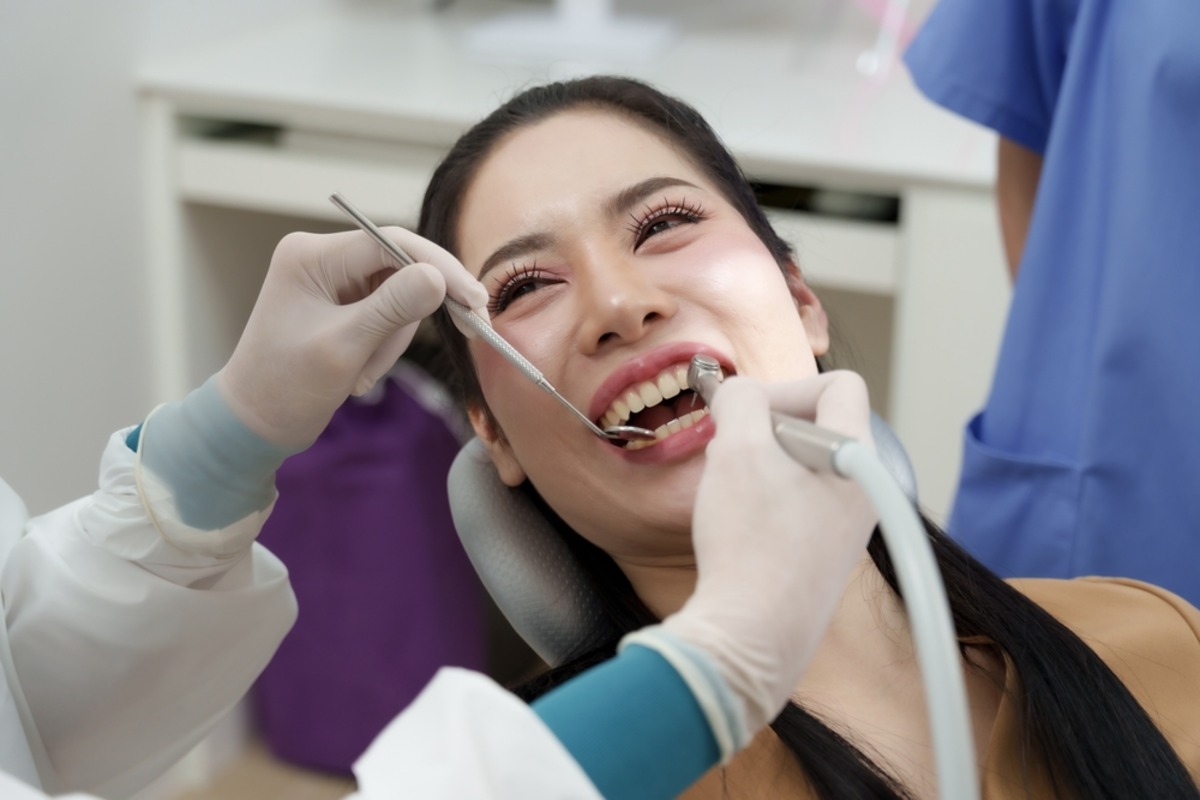
What Tools Are Used During Your Visit
- Ultrasonic Tools: These use tiny vibrations and a water mist to break up large chunks of hard tartar.
- Hand Tools: These are fine metal hooks used to scrape away smaller bits of buildup in tight spaces carefully.
- Special Paste: This is a gritty polish that removes stains from coffee, tea, and food.
- Suction: This clears away all the water and debris instantly, so you stay comfortable.
Benefits Of Regular Deep Cleaning
A big reason to get a teeth cleaning near you every six months is to catch problems before they start to hurt.
During the cleaning, the team can see tiny signs of trouble that you can’t see in your bathroom mirror.
- Fresh Breath: Removing deep bacteria gets rid of the real cause of bad breath that mouthwash only hides.
- Stain Removal: Professional polishing makes your smile look brighter and feel much smoother than home brushing ever could.
- Gum Health: Cleaning under the gum line stops the redness and bleeding that often leads to gum disease.
- Early Check: The cleaning process lets the team feel for soft spots or cracks in your teeth.
Stopping Decay Before It Starts
One of the most important parts of your visit is the ability to prevent cavities with cleaning and fluoride treatments.
While you have fluoride in your toothpaste, the version used at the clinic is much stronger. This helps “fix” the weak spots in your enamel before they turn into actual holes.
By clearing away every bit of plaque and tartar, the team leaves the bacteria with nowhere to hide, making it much harder for decay to form.
Home Care Vs. Professional Care
This table shows the main differences between your morning routine and a professional check-up.
| Feature | Daily Brushing at Home | Professional Cleaning |
| How Often | Twice every day | Every 6 to 9 months |
| Main Target | Soft plaque and food | Hard tartar and deep stains |
| Tools Used | Soft brush and floss | Vibrating and metal tools |
| Gum Care | Cleans surface gums | Cleans deep under gums |
| Outcome | Keeping things clean | Deep cleaning and safety |
Why Does The Polish Make A Difference?
After the hard stuff is removed, the team uses a spinning cup and a special paste to polish your teeth. This isn’t just to make them look pretty.
It actually makes the surface of your teeth so smooth that new plaque has a very hard time sticking to them. Home toothpaste is made to be safe for everyday use, so it is much weaker than the paste used at the clinic.
Once your teeth are polished, they have a “glass-like” finish that feels very clean to your tongue.
Tips For Your Daily Routine
- Checking Your Way: The team can show you exactly which spots you are missing at home so you can do a better job.
- The Right Products: You can get tips on which type of floss or mouthwash is actually best for your mouth.
- Food Tips: Learning which snacks are secretly hurting your teeth helps you make better choices.
- Custom Advice: If you have braces or a bridge, the team shows you how to clean around them properly.
Keeping Your Smile Bright And Healthy
At Steeles Weston Family Dental, we want to help you have the healthiest smile possible. Our team takes pride in giving gentle and thorough care that leaves your mouth feeling fresh and safe.
We believe that by working together, we can make sure your natural teeth stay strong for your whole life. If it has been a long time since your last check-up, we are here to help you get back on track. Reach out to us today to see how professional care can make a big difference!
Frequently Asked Questions
Does a professional cleaning hurt my teeth?
No, the tools are made to remove tartar and stains without scratching your natural teeth. In fact, removing the hard tartar actually protects your teeth from the acid that bacteria make.
Why do my gums bleed during the cleaning?
If your gums bleed during a visit, it usually means they were swollen because of plaque and tartar buildup. Once the area is cleaned and you keep up with brushing at home, the bleeding should stop in a few days.
How long does a typical appointment take?
Most cleaning visits take about forty-five minutes to an hour. If you go every six months, the appointments are usually faster and more comfortable because there is less to clean.
Can I eat right after my cleaning?
If you got a fluoride treatment, you should wait at least thirty minutes before eating or drinking anything hot. Otherwise, you can eat right away, though your teeth might feel a bit sensitive for an hour.